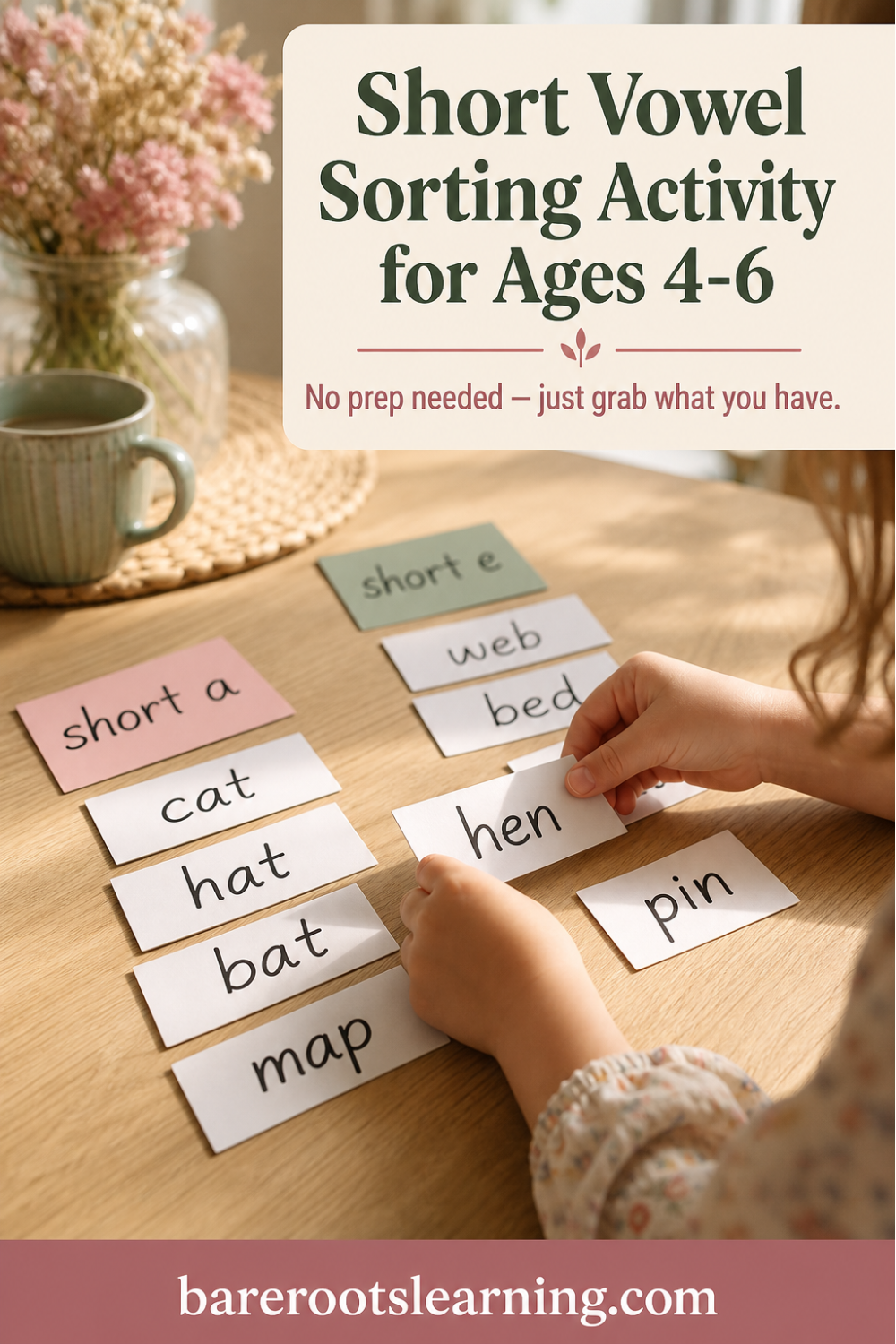
The Right Order to Teach Short Vowels in Kindergarten
Have you ever sat at your kitchen table, carefully pointing to the word “pin,” only for your five-year-old to confidently shout “pen”? You gently correct them, emphasize the sound, and try again, but they just stare at you, completely lost.
Let’s take a moment to understand what is going on here. Your child isn’t trying to be difficult, and they aren’t failing to pay attention. The truth is, if you are teaching short vowels in the traditional alphabetical order – a, e, i, o, u – you might accidentally be making reading much harder for their brilliant, developing brain!
The Hidden Trap of ‘A, E, I, O, U’
Most of us grew up singing the alphabet song, so it feels entirely natural to introduce short vowels in that exact alphabetical order. However, systematic phonics curricula and cognitive reading research tell us we need to completely ditch this approach!
Here is why: short vowels are acoustically and visually incredibly similar, making them a major source of confusion for beginning readers. Specifically, the short “e” (as in bed) and the short “i” (as in pit) are the two most frequently confused sounds.
When we introduce “e” and “i” right next to each other in a teaching sequence, it dramatically increases reading and spelling errors. Young children simply struggle to perceive the subtle differences in how those two sounds are articulated and heard.
The Science-Backed Vowel Sequence
To protect your child’s confidence and minimize auditory confusion, we need to separate those highly confusable sounds. By placing acoustically distinct sounds between them, we give the brain time to process and map each unique phoneme.
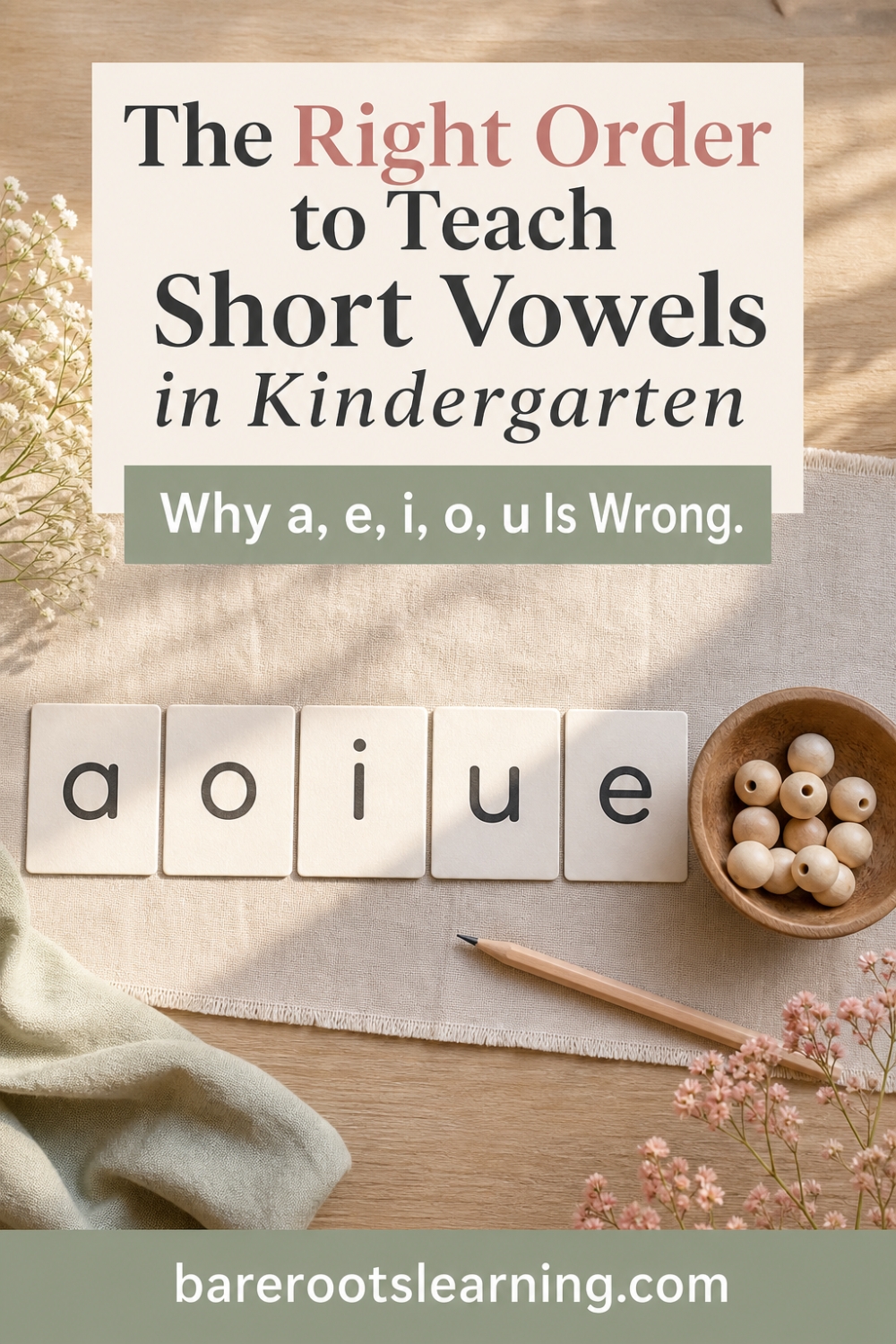
The optimal, research-backed instructional sequence is actually a, o, i, u, e.
- Start with ‘A’: We always begin with short “a” because it is the most acoustically distinct, highly imageable, and easiest sound for five-to-six-year-olds to isolate.
- Save ‘E’ for Last: Notice how short “e” is pushed to the very end of the sequence? Delaying this highly confusable vowel allows your child’s neurological representations of the other four sounds to become deeply consolidated and anchored before they ever have to tackle it.
How to Teach Vowels Without the Tears
When you sit down to practice phonics, keep these simple, prep-free rules in mind to protect your peace:
1. Give Them Equal Time Many traditional workbooks spend half the year drilling short “a” and rush through the rest. Instead, rebalance your focus. Give each short vowel equal, distinct focus – about 20% of your time per sound – so your child builds genuine mastery.
2. Don’t Mix Them Too Early It is so tempting to put “pin” and “pen” side-by-side to show your child the difference. But wait! You should only explicitly contrast commonly confused vowels after both individual sounds have been thoroughly consolidated and mastered on their own.
You do not need to spend hours drilling flashcards to build a strong reader. Remember to keep your lessons to short, joyful 5- to 10-minute micro-bursts, use the right sequence, and watch their reading confidence beautifully unfold!
Ready to ditch the prep fatigue? If you are exhausted by piecing together random, confusing worksheets and want a beautifully designed, research-backed system, let me help. Download the Free Early Phonics Toolkit today be entering your details below. It is packed with open-and-go, tactile printables designed to build your child’s reading confidence with absolutely zero late-night prep required from you.