

What to Do When Your 6-Year-Old Refuses to Read
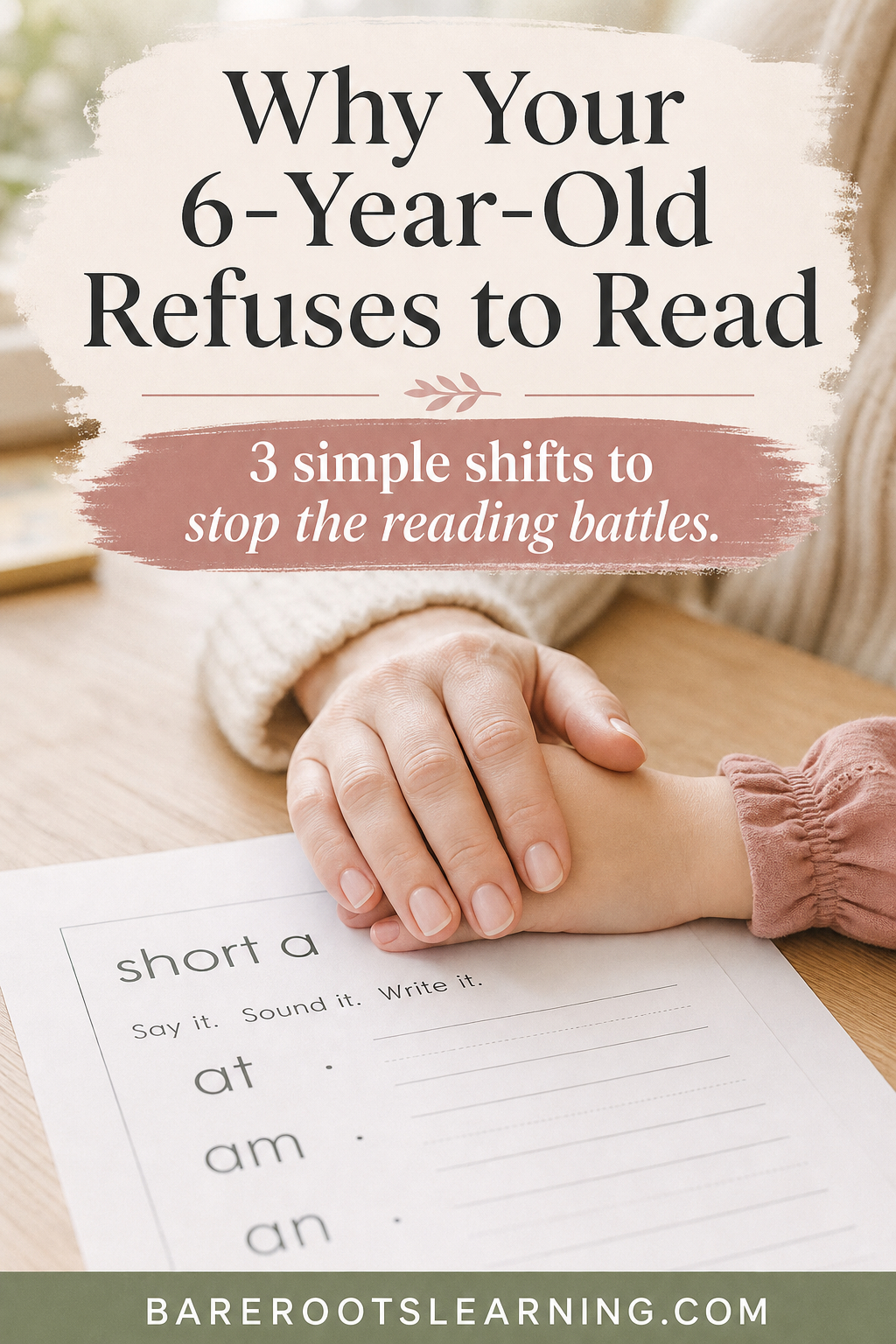
If your phonics lessons are ending in tears, resistance, or complete avoidance, please know that you’re not alone – and it’s not your fault. When a six-year-old consistently pushes books away or shuts down during reading practice, it’s often a sign of cognitive overload, not defiance.
By understanding the science behind how the brain learns to read, we can pinpoint the source of the frustration and make simple, screen-free adjustments to transform reading from a daily battle into a joyful, empowering skill. Here are three common triggers for reading refusal at this age, and the research-backed strategies you can use to turn things around:
1. Lessons That Last Too Long
When we’re worried our child is falling behind, it’s tempting to push through a 30-to-45-minute phonics lesson to ensure they grasp the concept. However, expecting a six-year-old to endure prolonged, continuous reading drills is counterproductive. Extended sessions lead to cognitive fatigue, frustration, and task avoidance, ultimately hindering memory consolidation.
The Solution: Studies show that learning outcomes are optimized when practice is broken into short, frequent “micro-sessions” of just 10 to 15 minutes. By keeping your lessons fast-paced and focused, you maintain engagement and prevent the mental exhaustion that triggers meltdowns.
2. Visually Overwhelming Materials
Another hidden cause of reading refusal is “visual crowding.” Many commercial worksheets cram 20 to 40 problems onto a single page, using bright colors and distracting cartoons to appear more engaging. These “seductive details” actually exhaust the very working memory resources your child needs for the challenging work of decoding. Cluttered, visually busy layouts can cause severe anxiety, tracking errors, and rapid cognitive fatigue for young learners.
The Solution: To protect your child’s focus and stamina, opt for clean, minimalist resources with ample white space. Black-and-white or high-contrast layouts significantly reduce visual strain, allowing your child to direct their full attention to the letters themselves.
3. Working Memory Overload
For a six-year-old, holding multiple abstract sounds in mind to blend them into a word places an enormous demand on their developing working memory. If your child is staring blankly at a word they easily decoded yesterday, they’re likely struggling to bridge the gap between hearing isolated sounds and mentally pushing them together. When this cognitive load becomes overwhelming, shutting down is a natural response.
The Solution: We can dramatically reduce this working memory burden by making invisible sounds physical. Try using Elkonin boxes – drawing three connected squares on a piece of paper – and having your child slide a small object (like a wooden bead, stone, or playdoh piece) into a box for each sound they hear. This spatial “scaffolding” externalizes the mental process, helping your child grasp the word’s structure without frustration.
Ready to end the daily reading battles? Download the free Blending Toolkit to start using supportive, science-aligned strategies tomorrow morning. It includes a 2-Minute Diagnostic Grid to pinpoint your child’s current decoding stage, tactile letter tiles, and a reusable “Read, Map, Write” template – this open-and-go system is designed to build genuine reading confidence.