

How to Build an Independent Morning Work Routine for Year 1
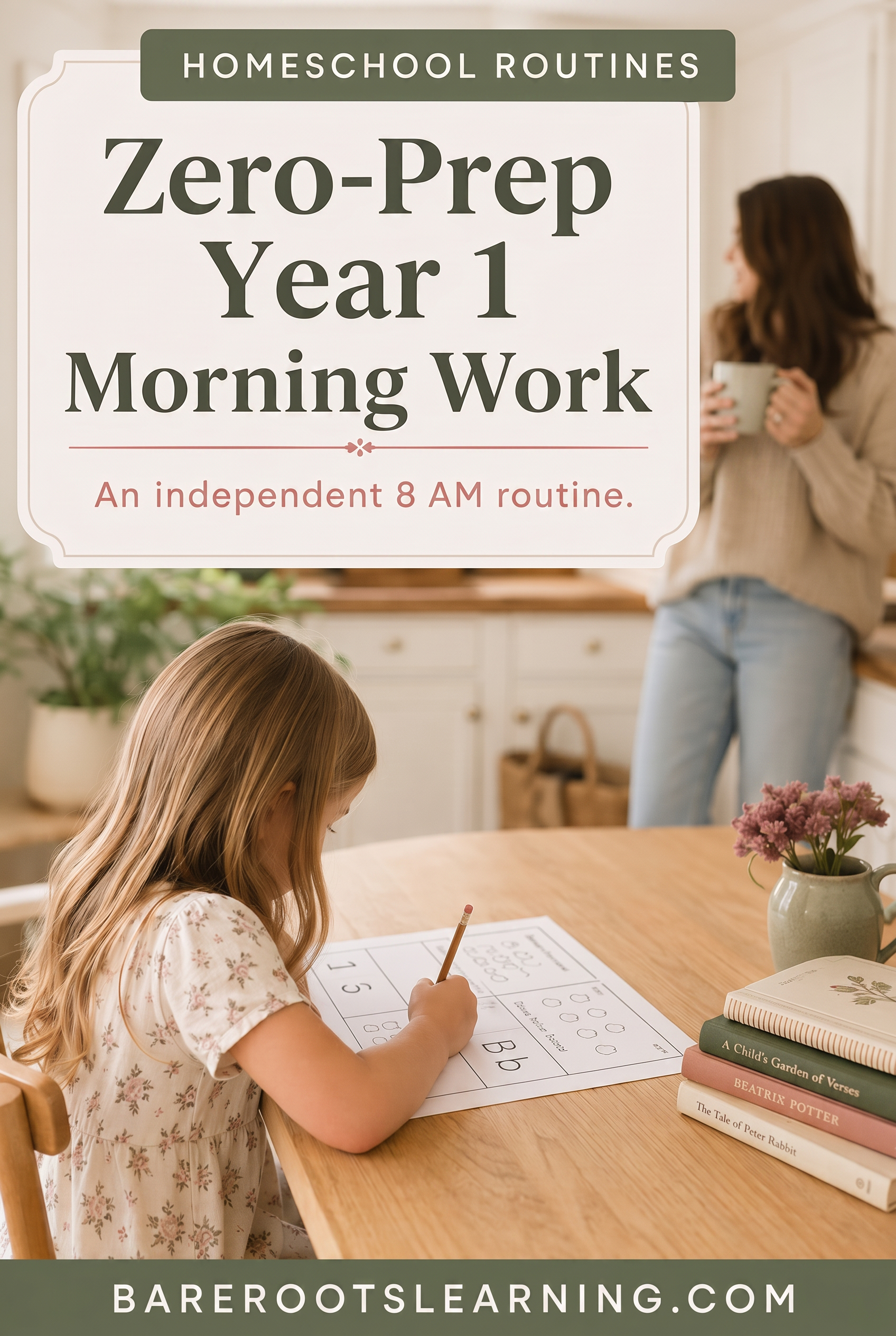
It is 8:00 AM. You are desperate to drink a hot cup of coffee, but your six-year-old is already hovering at the kitchen table, asking exactly what they need to do on their morning worksheet. If your homeschool morning requires you to hover, translate, and explain every single step of an activity, it isn’t truly independent work!
Many parents face this exact operational friction. We often hand our Year 1 students a stack of commercial printables to keep them busy, only to find that the complex layouts and shifting directions completely overwhelm their limited working memory.
However, “Independent Morning Work” is a highly strategic educational window designed specifically to foster child-led autonomy and self-directed practice while you prepare for the day. Here is how to build an intuitive, zero-prep morning routine that requires absolutely no parent instruction.
- Use Predictable, Repeating Layouts If a review sheet changes its format, rules, and visual layout every single morning, your six-year-old has to expend massive amounts of cognitive energy just to decipher what they are supposed to do. This extraneous cognitive load guarantees they will need to interrupt your coffee break to ask for help.
To build true autonomy, morning printables must be highly intuitive, featuring repetitive, predictable instructions. Educational psychology recommends consolidating activities into a few standardized, recurring visual protocols. When a child recognizes the layout from yesterday, they can focus purely on the learning task rather than navigating confusing new directions.
- Focus on Spiral Review, Not New Skills Independent morning work is the wrong time to introduce complex Year 1 phonics rules or new mathematical concepts, which require direct, parent-led instruction. Instead, this autonomous window should focus heavily on spiral math and grammar review, fine motor skill building, and basic handwriting practice.
Cognitive science demonstrates that actively retrieving previously learned information strengthens neural pathways and prevents the natural decay of memory. By having your child independently review familiar concepts – such as matching known letter sounds, tracing, or practicing spatial math foundations – you guarantee steady academic progress while completely avoiding instructional frustration.
- Chunk the Work to Prevent “Freezes” A standard commercial worksheet densely packed with 30 to 40 problems, thin margins, and distracting decorative borders will immediately cause visual crowding, task avoidance, and severe anxiety in young learners. To keep your six-year-old engaged without adult intervention, their morning work must feature clean layouts and generous white space.
Research recommends capping worksheets at a maximum of 6 to 10 active tasks per page. You can dramatically boost their independent stamina by choosing printables that use bold horizontal lines to chunk the work into smaller, manageable sections of 3 or 4 items. Making the tasks visually bite-sized helps children self-regulate, preventing them from freezing up before they even begin.
Ready to reclaim your quiet morning coffee? You do not need to spend your evenings cutting, sorting, and prepping complex activities to foster independence. By providing your Year 1 student with beautifully clean, visually calm review sheets, you give them the gift of self-directed success.