

The Simple Handwriting Trick That Builds Kindergarten Reading Fluency
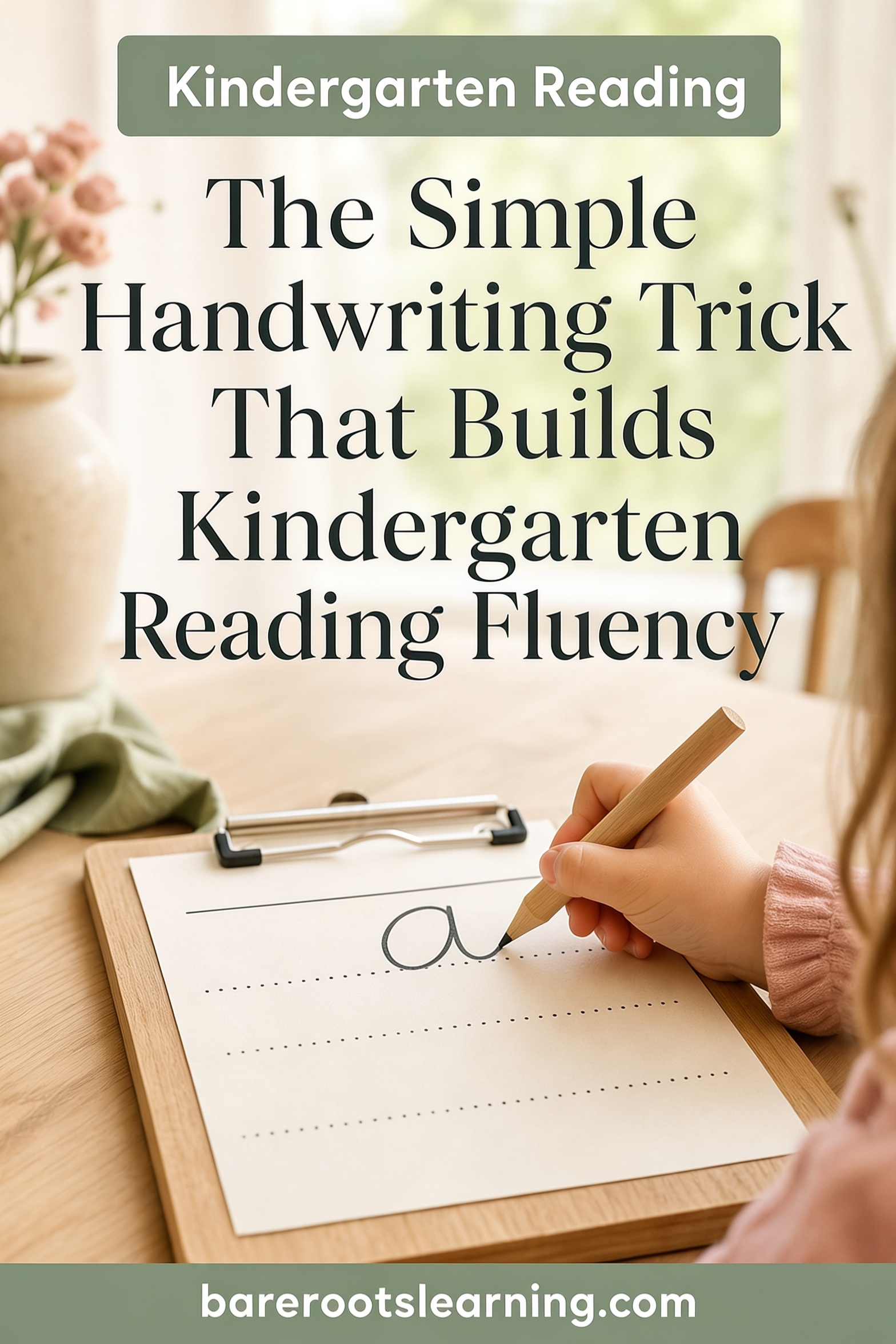
Watching a young child painstakingly grip a pencil and struggle to form letters on a page can easily feel like a test of patience. When the kitchen-table frustration peaks, it is incredibly tempting to switch to a digital phonics app or simply let them type, assuming the reading part is all that really matters. But separating the physical act of writing from the mental act of reading is a massive missed opportunity for your early learner.
Cognitive science reveals that fine motor skills and reading actually share a profound, deeply interconnected neural highway. Understanding this connection is the secret to building genuine reading fluency without the tears.
The “Neural Glue” of Handwriting
Research shows that the fine motor skills used during manual writing are highly correlated with early literacy outcomes. When a child physically writes a letter freehand, they are doing much more than just putting marks on a piece of paper. Brain scans reveal that this physical action immediately activates a highly specific “reading circuit” in their left hemisphere, specifically the Visual Word Form Area.
When we ask a child to write a word sound-by-sound, we are giving them the ultimate tool for orthographic mapping. They have to segment the spoken word, select the correct letters, and execute the fine motor movements to get it onto the page. This entire physical and cognitive sequence acts as the “neural glue,” permanently bonding the word’s visual spelling and auditory sound in their memory.
Why Tracing is a Trap
You might be relying heavily on dotted-line tracing worksheets, assuming they are a gentle first step for tiny hands. However, tracing follows a highly constrained, predictable motor path and completely fails to activate that vital reading circuit.
When a child writes freehand, their letters might be wobbly and “noisy,” but this variability actually helps their brilliant developing brain broaden its category boundaries, allowing them to easily recognise letters across different fonts and texts. Freehand handwriting is not just a motor output; it is a cognitive anchor that directly accelerates their reading speed and accuracy.
How to Support Fine Motor Reading Skills at Your Kitchen Table
You can easily foster this incredible brain connection with a few simple, screen-free shifts to your daily routine:
- Ditch the Tracing Lines: Move away from worksheets that require tracing whole words. Instead, use a simple “starting dot” to prompt independent, freehand letter generation.
- Use Proper Spatial Boundaries: Provide your child with developmentally scaled “dotted thirds” guidelines (a solid top line, a dotted middle line, and a solid bottom line). For 4- and 5-year-olds, a generous 24mm line height perfectly accommodates their large, uncoordinated early strokes. As they reach age 6 and their fine motor control matures, you can scale this down to 18mm.
- Prioritise Tactile Learning: Step away from the digital screens and embrace concrete, paper-based printables and manipulatives. Incorporating fine-motor tasks like cutting, pasting, and physically moving letter tiles into your phonics lessons provides vital feedback to the motor cortex, reinforcing the abstract visual letter shapes in their memory.
Ready to build a confident reader and writer? You do not need to spend hours planning complex handwriting lessons to see incredible progress. Grab the Homeschool Blending Toolkit today to access beautifully clean, screen-free printables designed to seamlessly guide your child through this exact science-backed workflow!