

What to Do in the First 5 Minutes of a Reading Lesson (A Simple Warm-Up Routine That Actually Works)
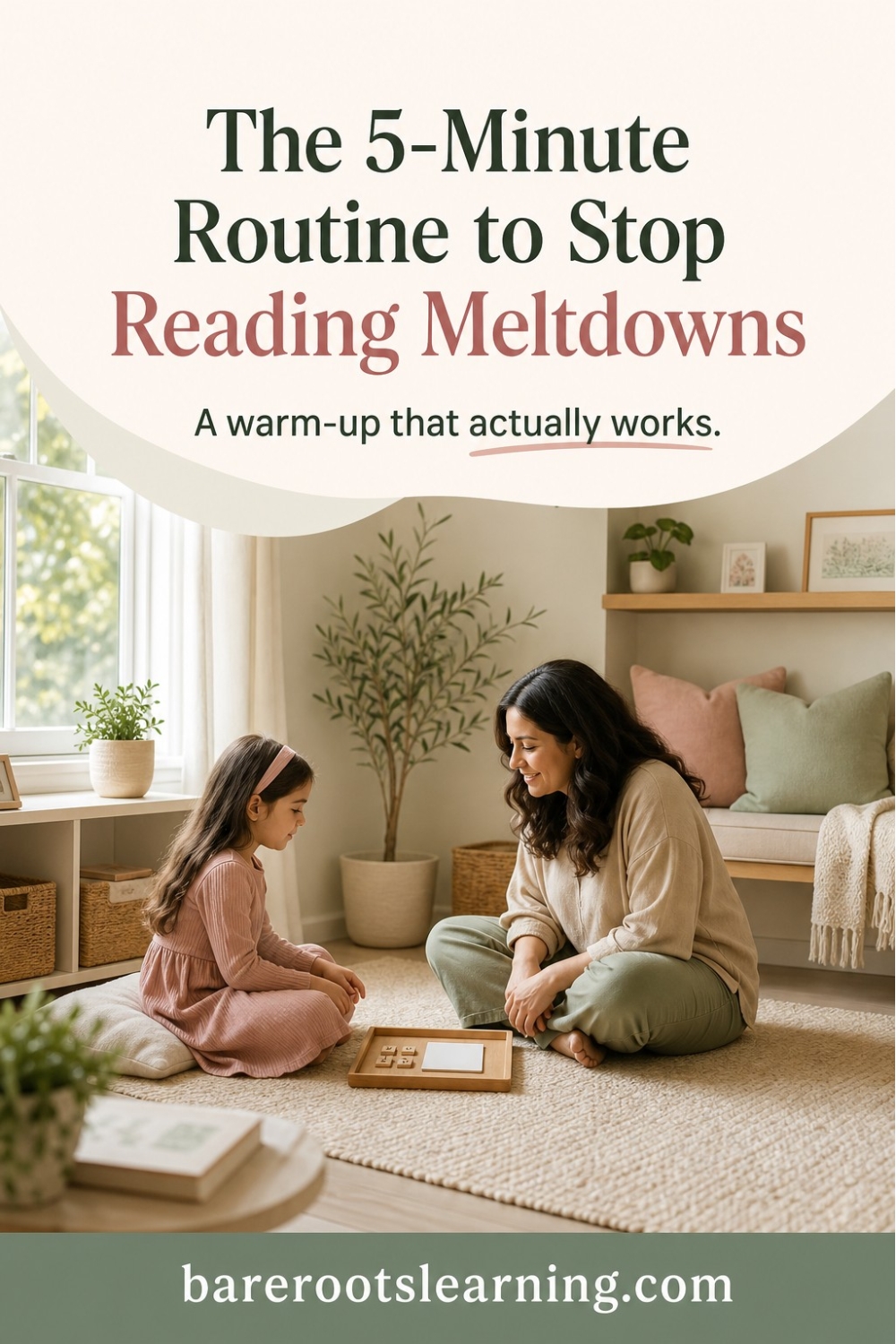
Have you ever watched your early reader drag their feet the moment you pull out a reading workbook? You sit down at the kitchen table, and before you have even looked at the first word, the tension is already building. If you are diving straight into new, challenging phonics rules, your child’s brilliant brain might simply be going into overdrive!
Expecting a young child to jump straight into intensive reading drills can quickly lead to cognitive fatigue, frustration, and those familiar task-avoidance behaviours. Instead, cognitive research tells us that we should structure practice in short, fast-paced bursts, with a massive focus on those very first few minutes. In fact, studies show that a consistent 5-minute daily phonics warm-up significantly boosts a child’s ability to decode words automatically.
Here is a simple, stress-free 5-minute warm-up routine you can use tomorrow morning to set a peaceful tone and prime their brain for true reading success:
Minute 1: The Gentle Check-In and Tone-Setting Before you ask them to sound out a single letter, take sixty seconds to establish a calm, safe learning sanctuary. The brain cannot comfortably process complex new letter codes if it is feeling pressured! Much like how a daily morning basket provides a relational and emotional anchor for your entire day, your reading session should begin by setting a peaceful, unhurried tone. Take a deep breath together, offer a word of encouragement, and remind them that making wobbly mistakes is exactly how our brains grow.
Minutes 2 to 4: The “Shuffled” Sound Review
Rather than starting with brand-new, difficult material, instantly build their confidence by reviewing what they already know. Try starting your session with a quick “shuffled review” using just three or four mixed words from prior lessons. By shuffling the words rather than using neat, predictable rhyming lists, you beautifully disrupt any mechanical pattern-following and require their brain to genuinely decode each individual sound. You could also use a simple “fluency grid” – a short table of repeating, familiar target words – as a brilliant 2-minute rapid-reading warm-up.
Minute 5: Wake Up the Brain with Tactile Movement
Reading isn’t just a visual task; getting your child’s hands involved provides vital feedback to their motor cortex, which deeply reinforces those abstract visual letter shapes in their memory. Before tackling the main lesson, have them wake up their tactile-kinesthetic pathways. You can do this by having them “air-write” a familiar letter with two fingers, build a warm-up word with physical letter tiles, or trace a letter freehand. This physical, manual movement acts as a cognitive anchor that binds the visual shape to its spoken sound, actively accelerating both their reading speed and accuracy.
Once you complete this gentle 5-minute routine, their brain is primed, confident, and ready for a short 10-minute lesson. Remember, keeping the entire reading session to a maximum of 15 minutes is the absolute sweet spot for keeping engagement high, preventing visual fatigue, and protecting your peace!
Ready to make your homeschool mornings easier? If you want a beautifully clean, zero-prep way to build these routines into your day, download the Free Homeschool Blending Toolkit. It is packed with screen-free, minimalist resources designed specifically to support your child’s fragile working memory without any of the frustrating visual clutter. It is everything you need to start a confident, tear-free reading routine tomorrow morning!