

3 Beginning Sounds Activities for Preschool That Build Real Reading Skills
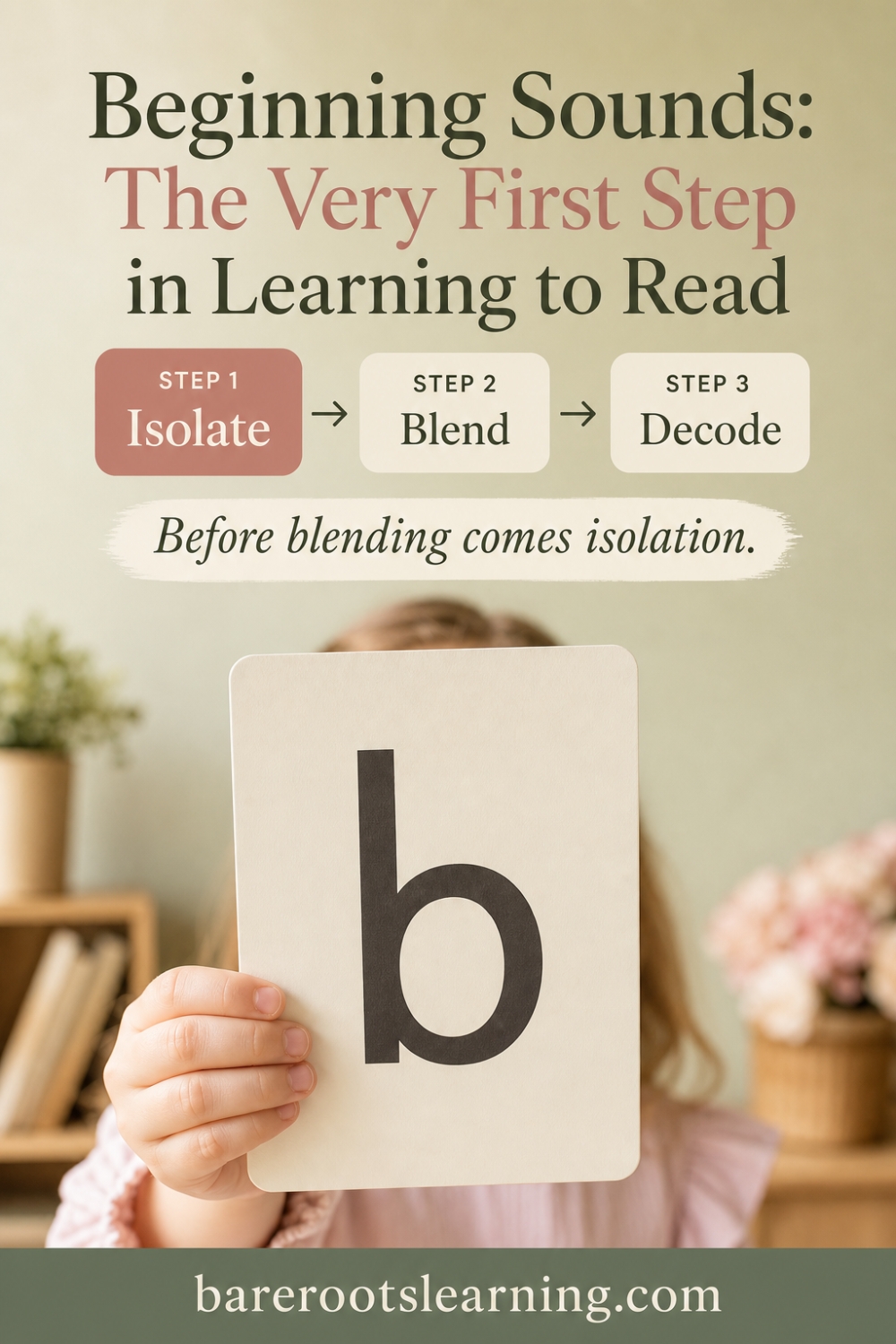
Before a child can blend sounds into words, they need to be able to hear individual sounds in the first place. That ability – called phonemic awareness – starts with the simplest skill of all: noticing the first sound in a word.
These three activities build that skill directly. They work for ages 3–5, need no special equipment, and feel much more like play than phonics practice. Which is exactly as it should be at this stage.
Why Beginning Sounds Come First
Reading acquisition follows a predictable sequence. Children first learn to hear whole words, then syllables, then individual sounds within words. And within sounds, the beginning of a word is always the easiest to isolate – it’s the sound the mouth makes first, and it carries the most acoustic prominence.
Rushing past this stage – or skipping it entirely and jumping straight to letters – is one of the most common mistakes in early literacy. A child who cannot reliably identify the first sound in a spoken word is not ready to decode written words consistently. Beginning sounds work is the foundation that everything else is built on.
Activity 1: I Spy With a Sound
This is the classic game with one small but important change: instead of using the letter name, use the sound.
“I spy with my little eye, something beginning with /b/.”
Not “bee.” Not “the letter b.” The sound: /b/.
This distinction matters because letter names and letter sounds are different things – and confusing them is one of the most common sources of early phonics muddle. The letter “c” is called “see” but says /k/. The letter “w” is called “double-u” but says /w/. Starting with sounds, not names, protects children from this confusion.
Play this anywhere – at the dinner table, on a walk, in the car. No equipment, no setup, maximum repetition.
Activity 2: Same Sound Sort
Gather six to eight small everyday objects and ask your child to sort them by their beginning sound.
You don’t need a matching set or a themed collection. Whatever is on the table works:
- A pencil, a pin, and a piece of paper all start with /p/
- A book, a button, and a small block all start with /b/
- A cup, a coin, and a small car all start with /k/
Ask your child to pick up each object, say its name clearly, listen to the first sound, and place it in a group with the other objects that start the same way.
This activity is doing something important: it’s separating the concept of a beginning sound from any written letter. Children are manipulating sounds purely as sounds before the letters appear. That’s the correct sequence – ear first, eye second.
Activity 3: First Sound Tap
Say a word. Ask your child to tap the table once and say only the first sound.
“Mop.” Tap. “/m/.” “Sun.” Tap. “/s/.” “Dog.” Tap. “/d/.”
Once that feels easy, make it playful. Say a word and get it deliberately wrong – “mop starts with /b/!” – and ask your child to correct you. Children are remarkably motivated by catching adults making mistakes!
You can also reverse the activity: say a sound and ask your child to think of a word that starts with it. “/f/… can you think of something that starts with /f/?” There’s no wrong answer as long as the beginning sound is right. “Frog,” “fish,” and “phone” all work. So does a made-up word, if they’re feeling creative.
What Comes Next
Once your child can consistently identify beginning sounds in spoken words, they’re ready for the next step: matching those sounds to their written letters. This is where phonics instruction – the formal introduction of grapheme-phoneme correspondences – begins.
The transition is smoother and faster when the ear is ready. A child who has spent weeks playing beginning sounds games will pick up letter-sound relationships much more quickly than a child who encounters them cold.
Just Starting Out?
The free Bare Roots Learning Homeschool Blending Toolkit includes a parent observation checklist that covers beginning sound isolation alongside four other key early literacy milestones. It takes minutes to use and helps you know exactly where your child is – and what to focus on next.
[Download the free toolkit by entering your details below →]