

Word Families vs Phonics: Why One Works and One Doesn’t
You are sitting at the table, feeling a surge of pride. Your five-year-old is breezing through a worksheet, reading cat, bat, hat, and mat in rapid succession. They are a reading genius! But later that afternoon, you open a storybook, point to the word bat isolated on the page, and they stare at it blankly, or worse, guess a completely different word.
This can feel incredibly frustrating to watch them master a word on a worksheet, only to completely “forget” it hours later. You might wonder if they were really paying attention in the first place. They were paying attention – just not to the whole word. If you rely heavily on word families to teach early reading, you might accidentally be building a guesser instead of a genuine reader. Here is a look at the cognitive science behind why this happens and how to easily fix it.
The Hidden Trap of Word Families Word families are groups of words that share a common rhyming ending, like the “-at” family. Because the human brain naturally loves matching patterns, grouping words this way feels like a massive shortcut to reading.
However, cognitive reading research shows a significant downside to overusing neat, rhyming lists. When a child reads a list like cat, bat, hat, their brain quickly realizes that the ending never changes. Instead of tracking the word from left to right, their eyes begin to skip the first letter entirely. They blindly repeat the “-at” pattern and just mechanically attach a new starting sound. They aren’t actually decoding the word; they are pattern-following. This creates poor eye-tracking habits and completely bypasses the careful, letter-by-letter analysis required for true reading.
Why Explicit Phonics Works Better
To build a confident, fluent reader, we need to focus on phoneme-by-phoneme synthesis – the core of explicit phonics.
True reading, known as orthographic mapping, requires a child to look at the entire word from left to right, matching every single letter to its specific sound. When we prioritize this sound-by-sound blending over larger word family chunks, we force the brain to actively process the entire spelling sequence. This is the only way a word becomes permanently anchored in their long-term memory as a sight word.
How to Shift Your Routine Today
You do not need to throw away your word family activities entirely! They are still a fun way to play with rhyme and build vocabulary. But for your core reading instruction, try these simple, screen-free adjustments:
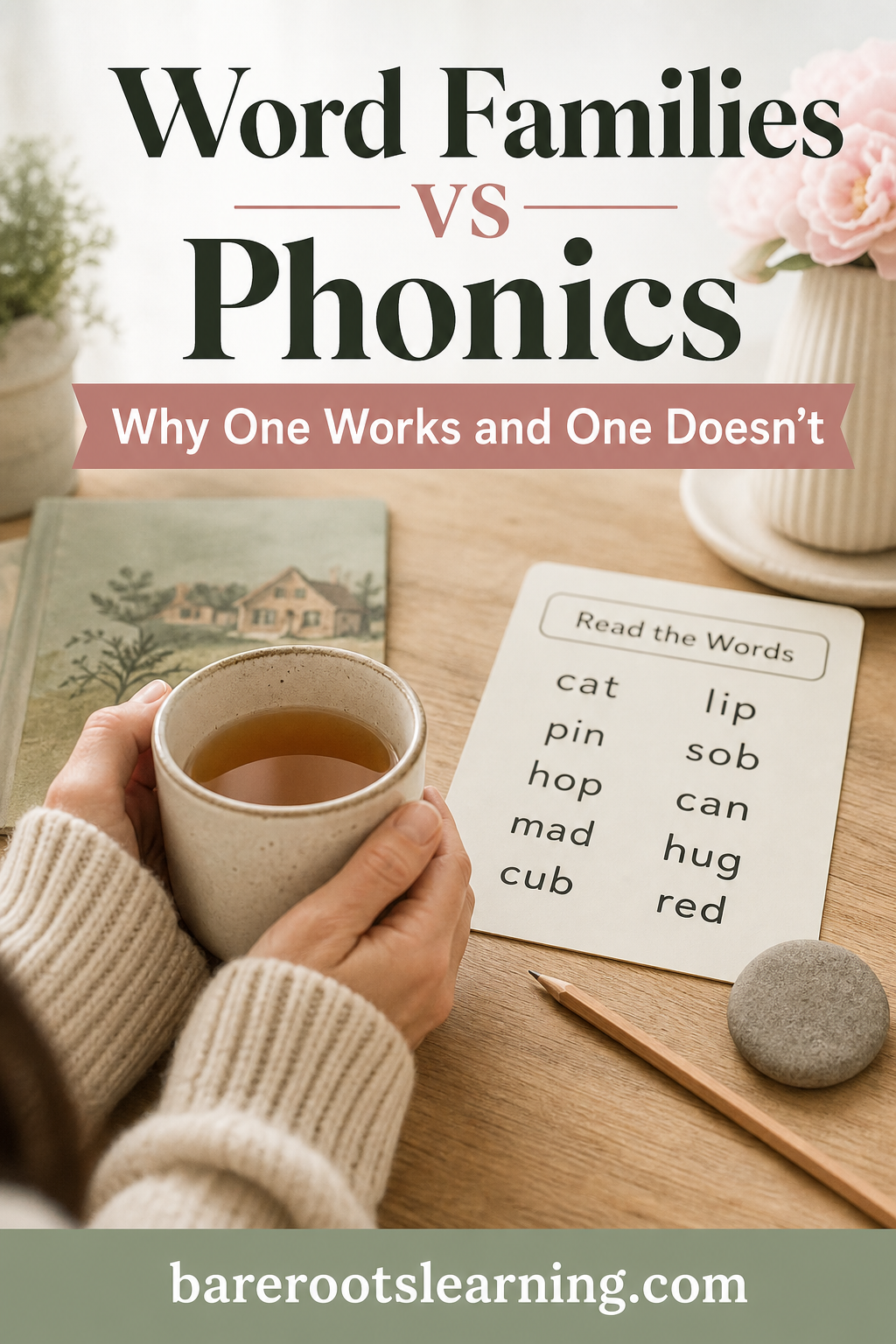
1. Mix Up the Practice Lists Avoid practicing words exclusively in rhyming groups. Instead, use “mixed” or “shuffled” lists. Place words like cat, pin, and hop right next to each other. By removing the predictable rhyming pattern, you force your child’s brilliant brain to actively scan and decode every single word from start to finish.
2. Focus on Sound-by-Sound Spelling When using physical letter tiles or writing out words, encourage your child to build the word sound by sound, rather than handing them a pre-made “-at” chunk and asking them to swap the first letter. Tying the physical action of writing or moving a tile to the specific sound they hear ensures they are mapping the whole word correctly.
And finally, remember to keep these daily reading bursts short, mixed, and highly intentional. When you disrupt the predictable patterns, you stop the guessing habit in its tracks!
——————————————————————————–
Ready to eliminate the guesswork? If you are tired of worksheets that encourage guessing and want beautifully designed, research-backed tools, download the Free Early Phonics Toolkit today. It is packed with open-and-go printables, including mixed-word reviews and tactile sound-mapping sheets, to help your child master genuine decoding skills with absolutely zero stress.