

What Are Digraphs? A Simple Guide to sh, ch, th and ck for Beginners
Picture this. You are sitting at the kitchen table, and your early reader is finally getting the hang of sounding out simple words like cat and bug. But then they encounter the word ship. You watch them point to each letter and carefully say “/s/ – /h/ – /i/ – /p/.” The result is a confusing string of sounds, and you can instantly see the frustration building in their eyes.
Your child isn’t doing anything wrong! They have simply encountered a digraph. Here is exactly what is happening in their developing brain and a simple, screen-free way to help them master this new reading milestone without the tears.
What Is a Digraph? In early literacy, a digraph is simply a combination of two letters representing a single speech sound, such as the “sh” in “ship” or the “ck” in “duck”.
Once your child has mastered basic single-letter sounds, the next logical step in a systematic phonics sequence is to introduce these combined sounds. The most common consonant digraphs you will work on first are sh, ch, th, wh, and ck.
Why Digraphs Cause Reading Fatigue
Why is this suddenly so difficult for your five or six-year-old? Because to read a word with a digraph, your child has to actively suppress their very strong instinct to sound out each letter individually.
Why is this suddenly so difficult for your five or six-year-old? Because to read a word with a digraph, your child has to actively suppress their very strong instinct to sound out each letter individually.
Moving from simple one-to-one letter matches to complex, multi-letter spellings causes a heavy cognitive load. If we aren’t careful, this decoding fatigue will overwhelm their working memory, and they will quickly revert to looking at pictures and guessing the word instead of reading it.
The Simple Visual Fix: Phoneme-Based Sound Boxes
To prevent cognitive overload, we need to make these invisible sounds visually concrete. The most effective way to do this is by using physical sound boxes (also known as Elkonin boxes).
To prevent cognitive overload, we need to make these invisible sounds visually concrete. The most effective way to do this is by using physical sound boxes (also known as Elkonin boxes).
The secret to making this work is that the boxes must be structured around phonemes (the actual sounds you hear), not the individual letters.
Here is how to do it at your table today:
- The “Fish” Example: If you are mapping the word fish, you will provide exactly three blank boxes. Your child places the letter “f” in the first box, the “i” in the second box, and the digraph “sh” shares a single box at the very end.
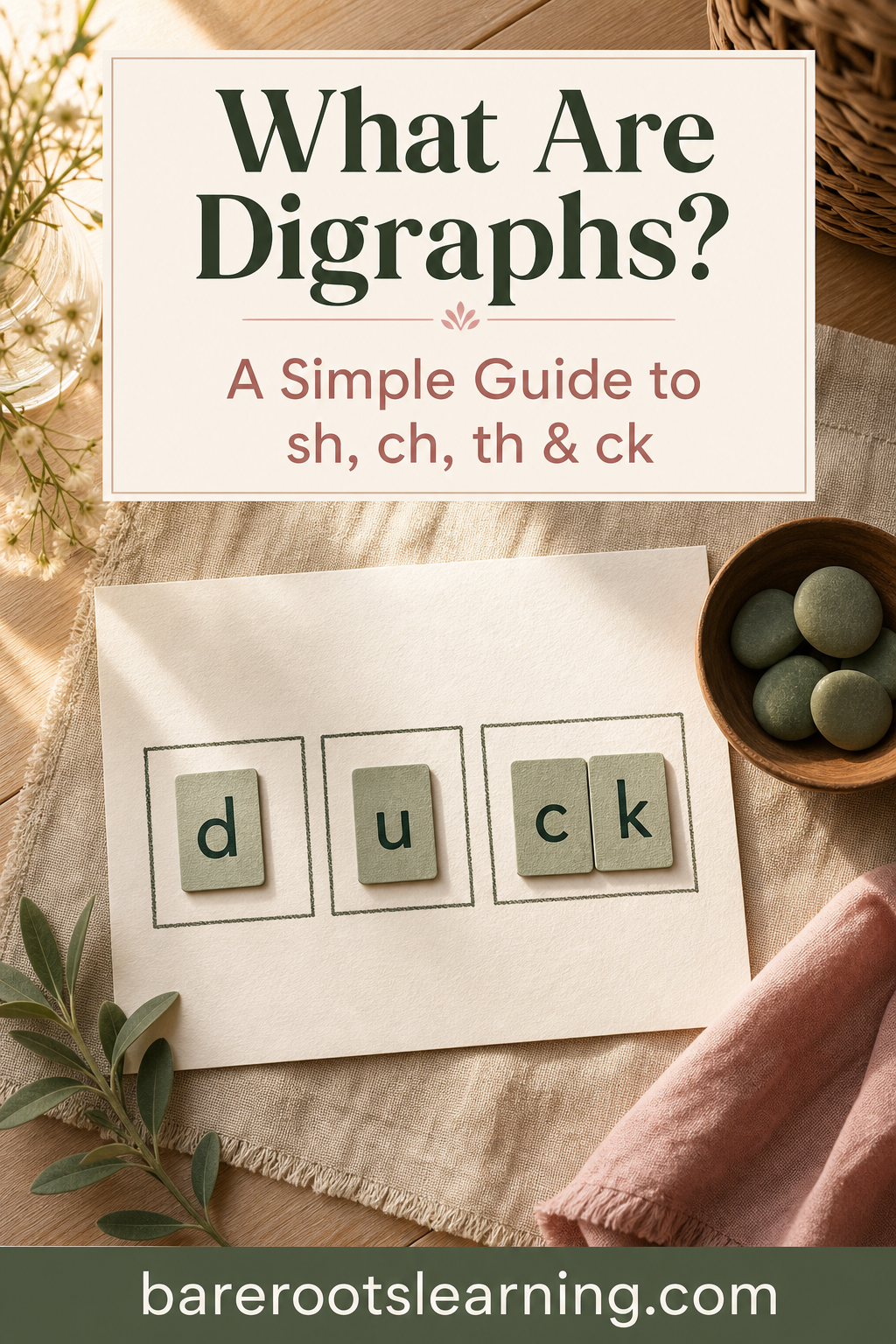
- The “Duck” Example: The word duck consists of three sounds: /d/ – /u/ – /ck/. Your child places the “d” in the first box, the “u” in the second, and the “ck” in the third.
By forcing the two letters to live inside one single box, you are providing a brilliant visual boundary. This physically teaches the child that while a word like duck has four letters, it contains only three distinct speech sounds. It completely removes the guesswork and makes spelling beautifully logical.
Ready to make advanced phonics stress-free? If you want to skip the late-night preparation and get beautifully designed, research-backed activities, download the Free Early Phonics Toolkit today. It is packed with open-and-go sound mapping templates that build real reading confidence with zero prep required from you.