

Why Your Child Reads a Word Correctly One Day and Forgets It the Next (It’s Not What You Think)
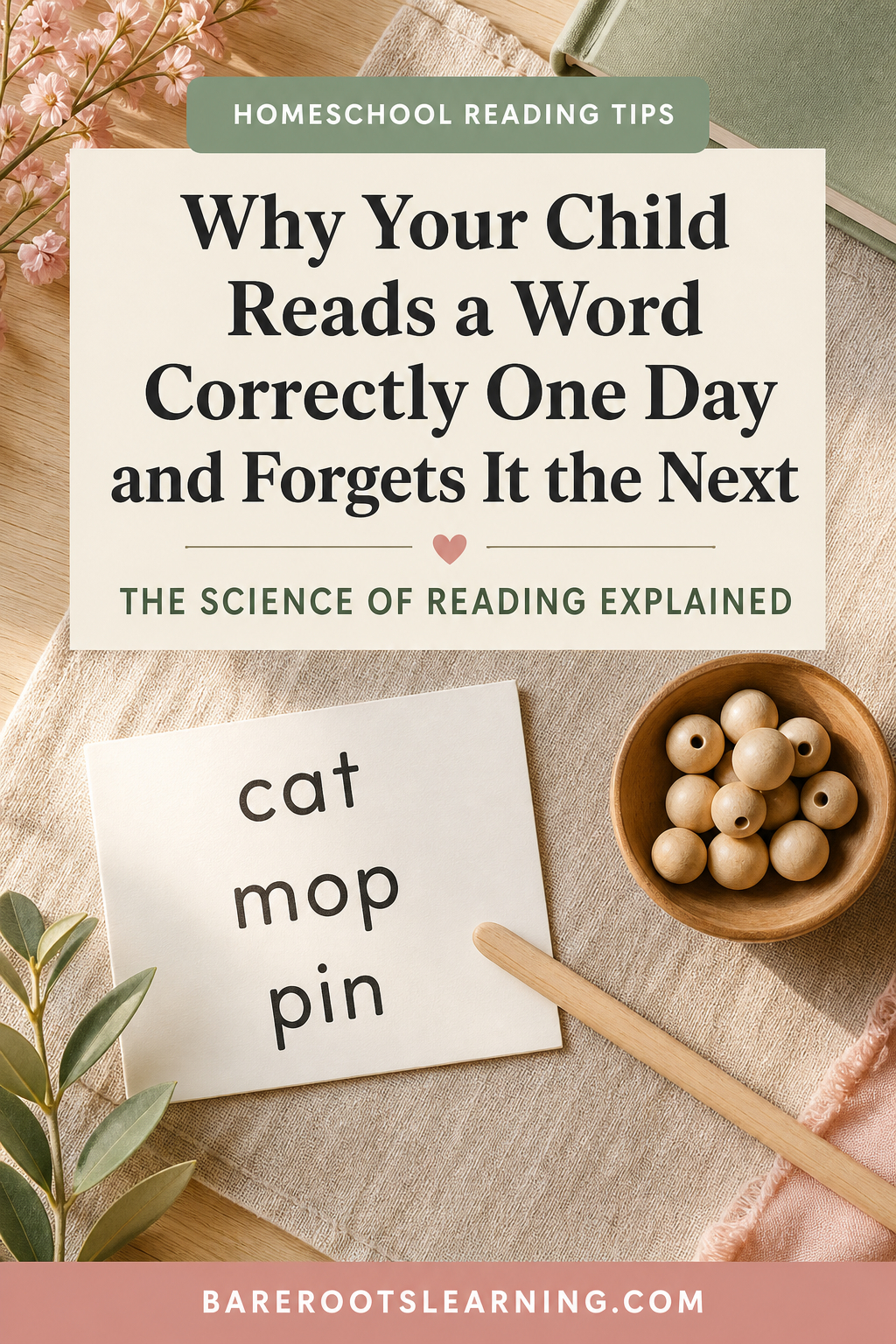
Have you ever experienced the sheer joy of watching your five-year-old beautifully sound out the word “cat” on Tuesday, only to have them stare at it with complete confusion on Wednesday? It is arguably one of the most demoralising moments at the kitchen table. You might start to wonder if they just aren’t paying attention, or worse, if you need to drill them with more flashcards.
Take a deep, reassuring breath! This frustrating pattern of inconsistent word recall is not a sign of failure, and it has nothing to do with your child’s intelligence. In fact, it means their brain is doing exactly what it is supposed to do.
The Heavy Lifting of Early Reading
To understand what is happening, we have to look at the fascinating science of how a child learns to read. Unlike spoken language, the human brain is not naturally wired to read. Your child is having to literally rewire their visual system to understand that abstract printed symbols match spoken sounds.
When they first learn to decode a new word, it takes an immense amount of deliberate focus and consumes almost all of their fragile working memory. Until a word is permanently locked into their long-term memory – a cognitive process called “orthographic mapping” – they have to rebuild that word from scratch every single time they see it.
Research shows that while some typically developing children might lock a word in after just one to four exposures, others may need anywhere from twenty to thirty-six meaningful repetitions before it truly sticks. If they read it perfectly yesterday but not today, they simply haven’t crossed that “threshold of learning” yet.
Why “Forgetting” is Actually Normal
Furthermore, cognitive science tells us that forgetting is a completely natural neurological process. Early childhood memory schemas decay rapidly if they aren’t actively retrieved.
If we drill a single word over and over in one long sitting, it might look like they have mastered it, but that massed practice (or “cramming”) actually leads to incredibly fast forgetting. When repetitions are spaced out over time, the brain is forced to actively retrieve the concept, which strengthens the neural pathway and securely maps the word.
What to Do Instead (The Kitchen-Table Fix)
So, how do we help them cross that learning threshold and lock those words in permanently without the tears?
- Keep it Short: Ditch the 30-to-45-minute reading drills, which only cause cognitive fatigue and task avoidance. Stick to high-velocity, 10-to-15-minute micro-sessions to keep their engagement high and protect your peace.
- The “Shuffled” Review: Instead of drilling the same word repeatedly, spread the practice out. Start each daily session with a 2-minute “shuffled review” of three or four mixed words from prior lessons. Disrupting the pattern forces their brain to genuinely retrieve the sounds, strengthening the memory far better than passive re-reading.
- Write It Out: Reading and spelling share a deeply interconnected neural highway. When your child physically segments a word’s sounds and writes the letters out freehand, that physical graphomotor movement acts as the “neural glue” that permanently bonds the visual spelling and spoken sound together in their long-term memory.